Table of Contents
Complete information on export documents for coconut charcoal briquette buyers. *update for 2026
This article is up to date and valid for 2026.
Buying coconut charcoal is not only buying the actual product but also arranging export & import documentation for customs and shipping of shisha charcoal (coconut shell charcoal briquettes from Indonesia.
The main problem is that shisha charcoal is classified as Dangerous Goods (DG 4.2 // UN 1361) and not all shipping lines (only a few shipping lines accept it) accept it for shipment.
What are the most important documents you have to pay attention to:
First of all, the seller of charcoal has to provide you with the following documents:
- A certificate of Origin or COO is an important international export document that certifies that your coconut charcoal is wholly obtained, produced, and manufactured in Indonesia. The issuing COO is the General Directorate of Foreign Trade in Indonesia.
Notice that coconut manufacturers cannot issue this document by themselves. COO is printed on stamped paper with a registered number. This document is requested by customs in your country. There are several types of COO used for coconut charcoal export:
- Certificate of Origin Form A: If you are bringing coconut charcoal to Canada, Japan, Russia, Europe, the USA, and Turkey, the original copy of this COO is light green.
- Certificate of Origin Form D: is for ASEAN countries such as Brunei, Malaysia, Singapore, Vietnam, the Philippines, and Thailand. The original copy of this COO is red.
COO in Indonesia is issued post-factum, i.e., after the ship sails from the harbor. Usually, it takes 1-2 days to issue this document. The cost of issuing is 15 USD.
2. Bill of lading or B/L – is a document issued by a carrier to acknowledge receipt of cargo for shipment from Indonesia. Basically, it is proof that coconut charcoal was shipped. You must show a B/L to customs in your country to receive the goods. Without a B/L, you cannot receive charcoal in the country of arrival.
Usually, the coconut charcoal manufacturer sends you the original B/L via DHL after receiving the final payment. Another option is to perform a “Telex Release” – in this case, you get email/electronic confirmation and no actual papers.
B/L can be issued by the carrier (Maersk, OOCL, MSC, Evergreen, or others) or by a local transportation broker. It is important for you to get a B/L issued by the carrier, as you can check the status of your container online on the carrier’s website.
B/L from a transportation broker is usually issued one day after a container of charcoal is delivered to the port. Carrier B/L is issued one week later. This is the most important document for exporting and importing coconut charcoal.
The receiving party in B/L should be your company or the customs broker in your country.
3. MSDS—A Material Safety Data Sheet for shisha charcoal is a standard document issued by a surveyor or coconut charcoal supplier. It contains data on how to handle coconut charcoal cargo during transportation.
4. Invoice and Packing list – basically a standard commercial invoice. The packing list is a description of goods, i.e., how many boxes, weights, and pallets of charcoal are in a container. Those documents are important for your customs officers and the tax department in your country. The invoice & Packing list is issued by the charcoal factory.
Additional documents.
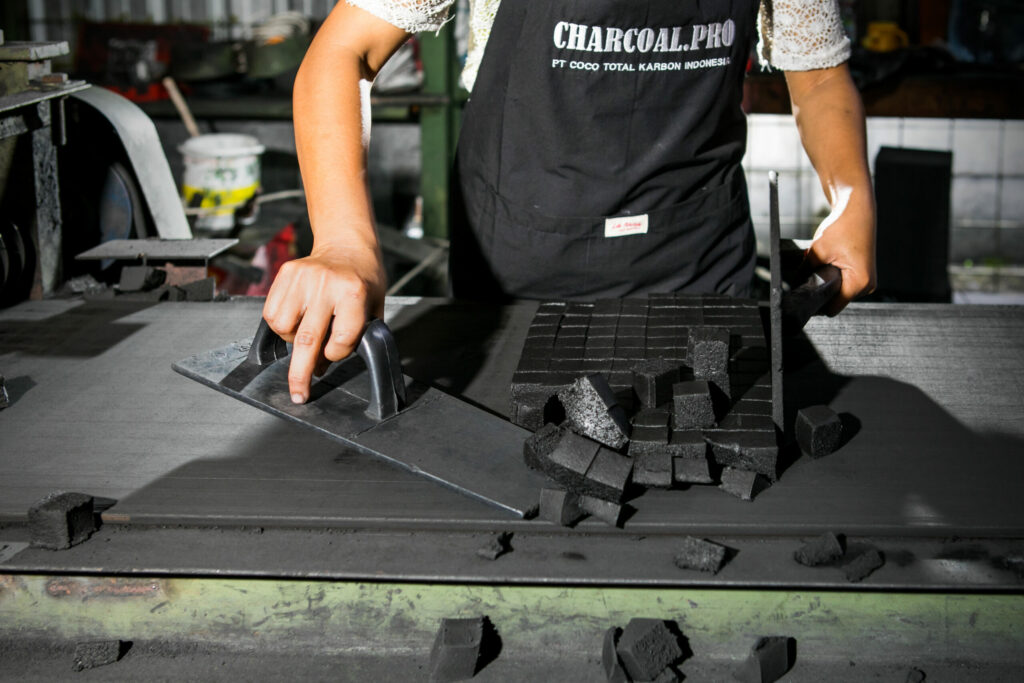
It is good to have an independent surveyor check the coconut charcoal. There are several international and reliable surveyors in Indonesia. To check coconut charcoal briquettes, I recommend you use Beckjorindo, SGS, or Intertek. Those surveyors are professional and have a good SOP for checking the quality and quantity of the coconut charcoal cargo.
The surveyor’s fee for coconut charcoal is about 400-600 USD, not including laboratory analysis. Using a professional surveyor is a good way to ensure that your charcoal shipment is free from surprises.
Sales contract. Signing a sales contract is a good way to protect yourself from scams in Indonesia. Most coconut manufacturers are solid and trustworthy people, but there are also several guys who pretend to be a charcoal factory when they are not. So, having a sales contract to buy charcoal is a legal way to protect yourself.
A sample sales contract for coconut charcoal for shisha can be downloaded, or you can request it directly from our charcoal expert, Greg.
Important update for 2026
Please pay attention that most coconut charcoal briquette factories and suppliers sell their products in two ways:
- As for actual “coconut charcoal briquettes with HS Code: 4402.90
- Under the name: “coconut product,” such as desiccated coconut or others
The right way to export charcoal briquettes is to use HS Code 4402.90, which is the actual name of “coconut charcoal briquettes.” However, if you use it, shipping companies will treat you as “Dangerous Goods.”
Not all shipping lines accept carrying Dangerous Goods. Besides it you will be requested (or your charcoal factory) to provide additional shipping documents:
- SHT – Self-Heating Test Report. An additional laboratory test, made by the independent surveyor, shows that your coconut charcoal is not self-flammable. The cost of SHT in Indonesia in 2026 is 185 – 230 USD. The time to get this certificate is 2-3 days. The factory has to send charcoal briquette samples to the lab and wait for the official report.
- ROA – Report of Analysis – similar to SHT documents issued by the independent laboratory. The cost of the ROA is 125 – 150 USD
An example of an SHT certificate can be found on our website here, or you can request the latest SHT directly from US.
Both of those documents are required for each shipment of Dangerous Goods, such as coconut charcoal briquettes.
Your coconut charcoal factory will most likely ask you to cover those costs. Besides it, you will have “fun” finding the carrier (feeder ship) that will bring your charcoal from Surabaya or Semarang to the mother vessel. Most feeders are not allowed to take dangerous goods.
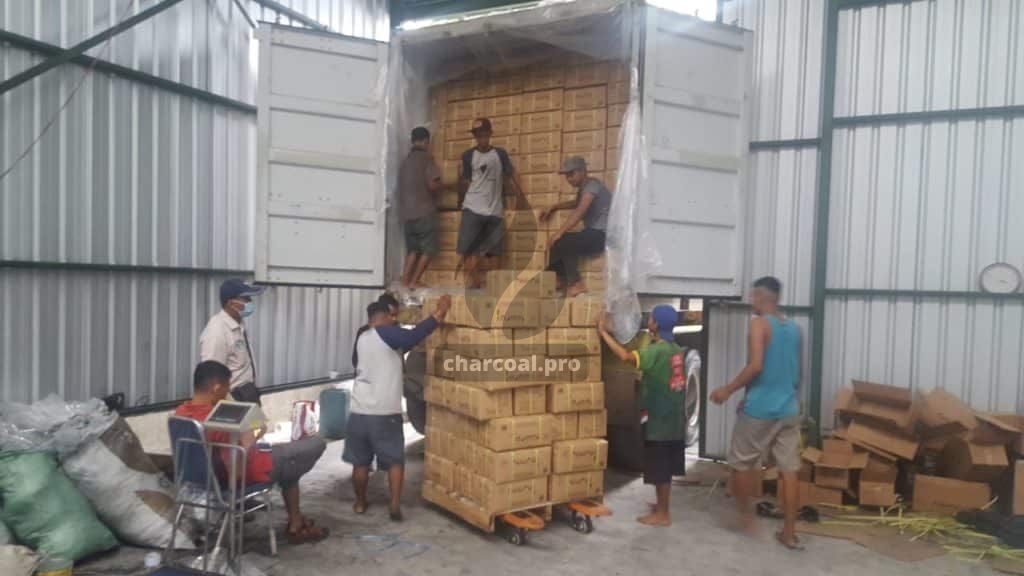
For example, OOCL has only one feeder per month that can carry Dangerous Goods (coconut charcoal briquettes) from the port of Surabaya
On the other hand, you can always claim your goods as a “coconut product,” not charcoal. There is a risk as you are lying to the carrier and customs. But at the same time, you do not need to declare it as Dangerous Goods, and it is much easier to find a feeder ship. There are also no charges for SHT or ROA.
Update for the documents for the Australian market
There are several additional documents for Australian customers. The Australian government requested to provide Fumigation with the level of AQIS – Australian Fumigation Accreditation Scheme.
Based on this AQIS, your container has to be fumigated once every 24 hours at the port. Please remember this when you order trucking from the charcoal factory to the departure port.
Shipping with Maersk shipping lines
Maersk is one of the largest shipping lines, but its policies are highly restrictive; they allow for both “restaurant” and “barbecue” charcoal, provided they meet strict safety and documentation requirements. That means that in 2023-2025, Maersk does not accept shisha charcoal for shipping. But starting from October 2025, Maersk will start accepting shisha charcoal for delivery.
Aqis fumigation is no longer needed for the Australian market.
Sales contract for buying coconut charcoal briquettes from the factory in Indonesia
But if a new buyer comes to me, I recommend signing the coconut charcoal sales contract.
You need a sales contract to protect your purchase of charcoal in a legal way. If something goes wrong, you can contact the Indonesian police or the arbitration to resolve the issue. Without a contract, you are risking a lot.
What should be written in the contract? The sales contract for coconut charcoal is different from other sales contracts.
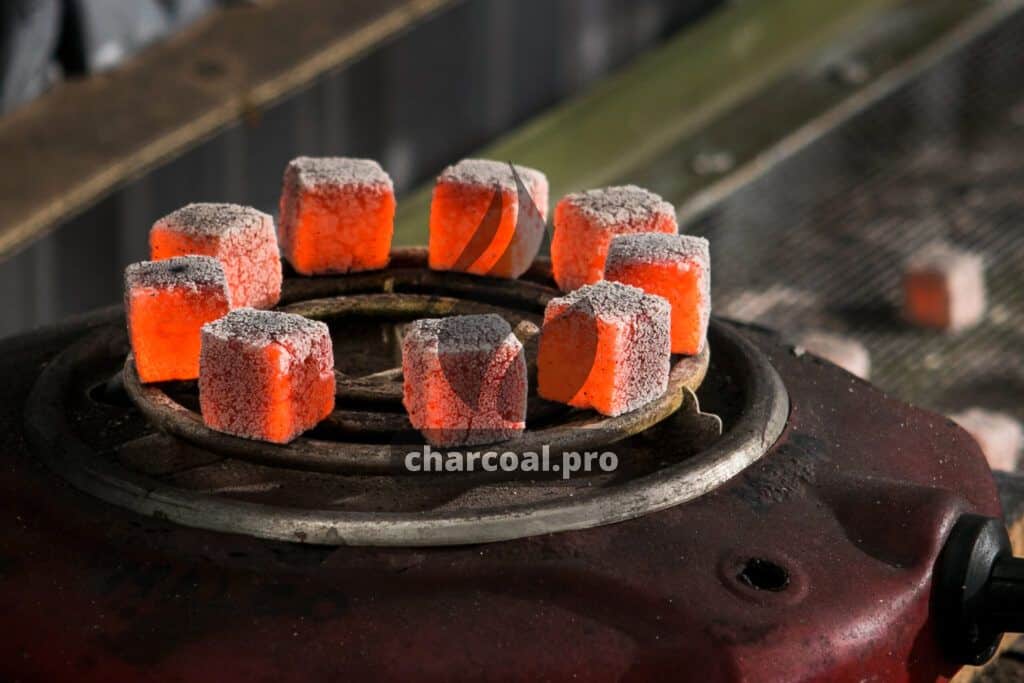
- First of all, you have to write down the specification for the coconut charcoal. With saying what is the max or min value for each position?
- What is the volume of the purchase of coconut charcoal? Do you buy 20 tons of charcoal or do you buy 2000 boxes? How many kgs are in each box? How many cubes of coconut charcoal are in each kg? What is the box design? What is the weight of the master box?
- What are the payment terms? How much is the down payment for buying coconut charcoal? How do you pay the rest? This is an important part as many buyers misunderstand the payment procedure.
For example, the coconut charcoal manufacturer proposed a 50% down payment, and the rest was against the documents. What does it mean? The first part (down payment) is clear. You transfer 50% of the invoice to the charcoal factory.
But what about finalizing payment? When should you transfer the other 50%? If the shipping of charcoal takes 30 days, on what day should you transfer the payment? If the seller of charcoal sends you a B/L after ten days, he expects you to pay immediately. But you may think of paying for goods after arrival at your port in 29 days. This is a small issue that causes a big misunderstanding in the coconut charcoal business. You should write clearly on what day you pay money to the factory. - Clear address of the coconut charcoal factory. Are you buying from a factory or a private person? What is the real address of the factory? Who is the exporter – your factory or their customs broker? What is the legal name of the coconut charcoal supplier? In Indonesia, it is easy to check if the company really exists or if it is just a fake factory. Go to https://ahu.go.id/profil-pt and write down the factory’s legal name. If the company is a real and legal entity, it will be on the list. If you cannot find your company’s legal name – it is a fake coconut charcoal factory – be very careful.
- The time frame of coconut charcoal production and shipping. You should write down the maximum time frame (lead time) for coconut charcoal production. Sometimes factories do not have a stock of coconut shells. Or they are working overcapacity. Ask the charcoal factory how long it will take to produce if you buy charcoal in a specific date range. Do not forget to write what the penalty is if a coconut charcoal factory is late in producing charcoal.
- Do not forget to sign the contract. Pay attention to who is signing the contract – is it the director, sales manager, or just a private person? Try to find him on Facebook or Instagram to check if he is related to this company or the coconut charcoal business.
You can find a sales contract for coconut charcoal for hookah at our website or request it directly from us. Just copy and paste it and use it for your purchase.
MSDS for Coconut Charcoal Briquettes for Shisha & Hookah
MSDS is a Material Data Safety Sheet – a document made by the charcoal factory.
Each factory shell has its own MSDS.
The document is usually required by the shipping line before you book the container.
The main purpose of MSDS is to describe safety measures for handling and send shisha charcoal.
Please note that coconut charcoal for shisha is a safe product, so basically, there is no limitation on transporting or handling it.
It is not an easily flammable substance. To make it fire, you have to put charcoal on an open fire for at least 5 minutes.
The following is the link to our MSDS document (non-DG)
Starting from 1 January 2026, shisha charcoal is delivered as Dangerous (Hazard) with DG MSDS
If you need to send coconut charcoal via DHL or airlines (as a sample) it is recommended to use the following MSDS for coconut charcoal.
If you need more information on our latest MSDS or SHT please contact us via WhatsApp or Email
SHT (Self Heating Test) for Coconut Charcoal for Shisha & Hookah
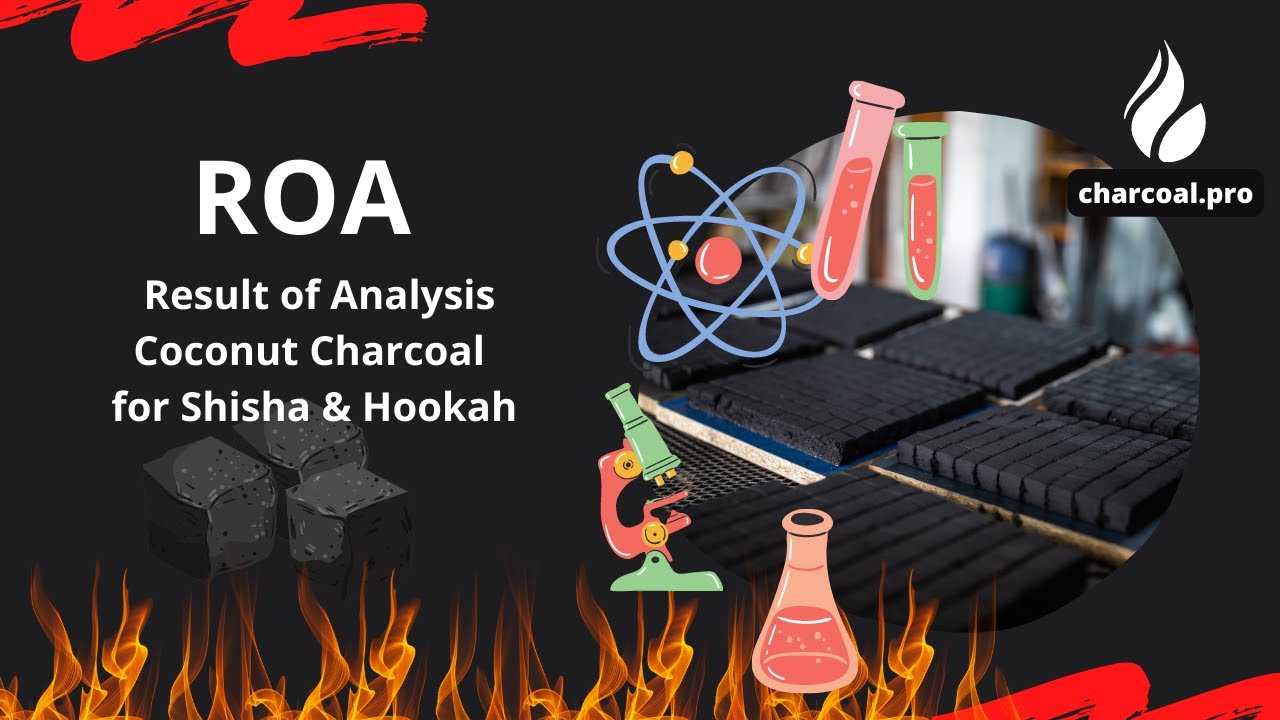
ROA – Result of Analysis Coconut Charcoal for Shisha
ROA is an essential document that proves the quality of coconut charcoal for shisha.
There are several independent laboratories that perform ROA, especially for coconut charcoal.
One of the best and most accurate is Beckjorindo Laboratory. They are located in several cities in Indonesia, like Surabaya, Lampung, and Semarang.
Most of our tests are performed in the Becjorindo Laboratory in Surabaya and Semarang.
It takes about 2-3 days to check charcoal in the laboratory.
We regularly send our charcoal samples to the laboratory for independent analysis of charcoal. This allows us to be 100% sure of the quality of the charcoal.
The most important part of ROA is ash content. It shows how much ash is left after the charcoal burned out.
The best practice for ultra-quality charcoal is 1.8 to 2.0% of ash content.
Super Premium is 2.0-2.2% ash content. Above 2.3% is Premium type and above 2.5% is Medium type.
Besides, we can check Moisture content, Fixed carbon, and volatile matter.
If you need more info on ROA, please contact us via WhatsApp or Email.
Dangerous Goods Declaration
A Dangerous Goods Declaration (DGD), also known as a Shipper’s Declaration (= from us as the factory) for Dangerous Goods, is a critical, legally required document used in the transport of shisha charcoal by sea.
It is a document produced by our charcoal factory that certifies the goods have been properly classified, packaged, marked, and labeled in compliance with international and national regulations.
Purpose: It acts as a safety document and a “passport” for shisha charcoal, informing shipping lines and emergency responders about the exact nature of the goods.
Weathering Certificate
A Weathering Certificate for shipping shisha charcoal is a mandatory manufacturer declaration attesting that the cargo has undergone stabilization post-production. Without this document, securing a booking container slot on major vessels is operationally impossible due to strict international maritime regulations regarding hazardous goods. It serves as the primary verification that the Shisha charcoal is safe for ocean transport.
Why does this matter? Because without this document, getting a booking container slot is operationally impossible.
The Physics: Why Wait 14 Days?
Charcoal comes out of the drying ovens hot. I don’t just mean temperature-wise—it’s chemically unstable.
- The Process: The briquettes need to sit in a dry, well-ventilated area for a minimum of 14 days.
- The Chemistry: During this time, the charcoal interacts with oxygen, the oxidation rate stabilizes, and the temperature equilibrates with the environment.
If you skip this? You risk self-heating during transit. The certificate is the factory legally promising that this specific batch has cooled down. It shifts the liability squarely onto them.
Don’t Confuse the Paperwork
People get this mixed up constantly. There is a massive difference between the SHT and the Weathering Certificate.
- SHT (Self-Heating Test): This is just a lab test on a sample. It proves your product formulation passes UN standards.
- Weathering Certificate: This proves the shipping batch currently sitting on the dock is safe.
You need both. The MSDS has to reference the UN number for DG 4.2 and attach the SHT results, which Customs will cross-reference with your weathering cert.
The Vanning Reality Check
You can have perfect paperwork, but if the physical check fails, it’s over. During Vanning (stuffing), independent surveyors are going to stick probes right into the center of your cartons.
The Golden Rule: The temperature generally must not exceed ambient temperature by more than 5°C.
If they find a “hot spot”? Rejected. If you pack warm charcoal, you get an “oven effect” once those container doors seal.
Navigating the Carriers: A Nightmare?
Booking DG 4.2 slots is tough because ships have limited “safety zoning” spots for this stuff. The big lines are paranoid—rightfully so—and they all have different quirks:
- MSC: Historically very strict. They often want a Letter of Indemnity (LOI) and a specific format for the declaration.
- Maersk: Rigid. They use a restricted list of approved labs for the SHT. If your dates don’t align perfectly with production logs? Denied.
- CMA: They focus heavily on the surveyor report, cross-checking it against your weathering letter.
Buyer Beware: Red Flags
If you are buying, audit the documents yourself. Don’t trust the sales rep.
- Signatures: It must be signed by the Factory Manager or QC Head. If a sales rep signed it, it’s trash.
- Dates: Ensure the declaration date is at least 14 days post-production.
- Specificity: Generic “To Whom It May Concern” letters get rejected. It needs the Booking Reference and Container Number.
Coconut charcoal briquettes HS Code, CAS, IMO, and UN number
Coconut charcoal briquettes’ CAS number is 68647-86-9.
Actually, it is the same CAS number as for coconut shell charcoal.
Please note that if you use CAS number 7440-44-0, it means that this is not a coconut shell charcoal briquette, but activated charcoal.
- EC number: 271-974-4
- EC Name: Charcoal, coconut shell
- Molecular formula: C
- IUPAC Name: carbon
- Composition: UVCB
- Origin: Organic
- COMMODITY: coconut charcoal briquettes
- HS CODE: 44029010
- IMO NUMBER: 4.2
- UN NUMBER: 1361
For importers and logistics professionals handling shisha charcoal, accurate classification is critical for customs clearance and maritime safety. Below is the comprehensive technical data sheet for Coconut Shell Charcoal Briquettes, based on the 2026 MSDS and standard export classifications.
This product is classified as a Class 4.2 Self-Heating Substance, requiring specific handling protocols under IMO/IMDG regulations.
| Category | Parameter | Value / Description |
|---|---|---|
| Identification | Product Name | Coconut Shell Charcoal Briquette |
| HS Code | 4402.90.10 | |
| CAS Number | 68647-86-9 | |
| EC Number | 271-974-4 | |
| Material Origin | Organic (Coconut Shell) | |
| Transport (DG) | UN Number | 1361 |
| IMO / IMDG Class | 4.2 (Spontaneous Combustion) | |
| Shipping Name | Carbon (Technical Name: Charcoal) | |
| Packing Group | III | |
| Lab Specification | Fixed Carbon | 85.39% |
| Ash Content | 1.62% | |
| Volatile Matter | 8.66% | |
| Moisture Content | 4.33% | |
| Ignition Point | >320°C |
Expert Shipping Analysis
CAS Number Distinction (Critical for Customs)
It is vital to use the correct CAS Number for coconut shell briquettes. The correct identifier is 68647-86-9
Warning: Do not use CAS 7440-44-0. This number corresponds to elemental or activated carbon. Declaring shisha charcoal under the activated carbon CAS can lead to customs hold-ups and misidentification of the cargo as a refined chemical product rather than a biomass fuel.
IMDG Class 4.2 Hazards
According to the Material Safety Data Sheet (MSDS), this product is a Self-Heating Substance. This means the charcoal creates heat when in contact with air without an external energy supply.
- Risk: Liability for spontaneous combustion.
- Shipping Requirement: Carriers will require a Vanning Survey certification. The container must be packed to minimize airflow, and the product must be sufficiently cooled/weathered prior to stuffing.
Surveyors and the independent laboratories approved by shipping lines
There are just a few laboratories, and surveyors are approved by shipping lines. One of the best, in my opinion, is Carsurin Tbk and Beckjorindo. They serve MSC, CMA CGM, and Maersk shipping lines.
For example, if you order vanning from another laboratory that is not accepted and approved by shipping lines, your container will be rejected and returned for restaffing.
So before ordering, make sure that your charcoal factory have arrange with Carsurin or Backjorindo for vanning.
Validation by the Chamber of Commerce
For some countries, for example, Kuwait, the Certificate of Origin, Invoice & packing list should be validated by the Chamber of Commerce. Our shisha charcoal factory is registered with the Indonesian Central Java Chamber of Commerce (Kamar Dagang Jawa Tengah, Kadin)
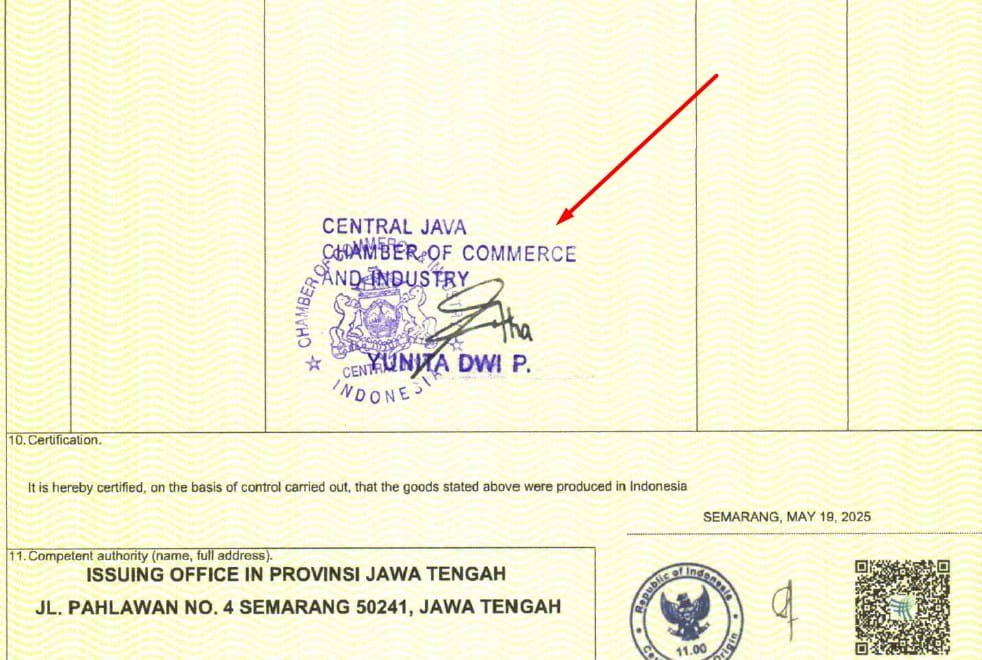
Certificate of Origin (COO) for shisha charcoal
A Certificate of Origin (COO) serves as the primary legal declaration verifying that a shipping consignment of shisha charcoal was produced entirely in Indonesia. This document is critical for customs clearance and determining the applicable import tax rates at the destination port. Without a valid COO, importers cannot access preferential tariff benefits provided by international trade agreements.
Bill of Lading – the most important document for shipping
The Bill of Lading (B/L) serves as the fundamental contract of carriage and the document of title for coconut shell charcoal briquettes. It acts as the receipt confirming that the shipping line has accepted the cargo in good order.
For wholesale bulk buyers, the B/L is the non-negotiable prerequisite for claiming possession of the container at the destination port; without it, the shisha charcoal remains locked in the terminal, accruing storage costs.
Basically, one who has it -> own the goods.
Manufacturing and packing declarations for shisha charcoal
It is a simple document that confirms that your charcoal is made by this factory and packaged according to the UN DG goods standard.
Invoice & Packing list
Proforma Invoice, Balance Invoice
For shisha charcoal, we usually use a Proforma Invoice, so you, as a client, you can make downpayment and after we finish production, we issue a final Balance invoice. In some cases, for example, if there are multiple sizes/items in one 20″ ft contianer we make a final balance invoice after container stuffing, to make sure in the invoice we write the actual number of boxes in the container.
Invoices are issued by our factory, stamped, and signed by the director. On the second page of the invoice, there are always the sales contract for shisha charcoal with terms and conditions.
Under the invoice or lower-value invoices
Some clients are asking to make a special invoice with a lower sale value, to keep import tax low. But please remember that this is illegal and can result in additional charges and fines from your customs. I strongly do not reccomend to use lower value invoices.
Always remember, while in the invoice we can write any numbers, but in PEB, – we still have to report the actual money that come to our account.
Packing list
The packing list is the document issued by our charcoal factory, showing what we have put inside the container, and what is the weight. Important to keep the Packing List up-to-date and according to the goods inside the container. If there is a difference between what is written in the Packing list and in reality, you can face big problems with your custom clearence.
ISF (Importer Security Filing) and LACEY
ISF (Importer Security Filing) and the Lacey Act Declaration are two mandatory, separate compliance requirements for importing shisha charcoal into the United States.
Commonly known as “10+2”, the ISF is a U.S. Customs and Border Protection (CBP) regulation for ocean freight imports. It requires importers to submit detailed information about their cargo before it is loaded onto a vessel destined for the U.S.
The Lacey Act is a U.S. federal law (amended in 2008) that regulates the trade of wildlife and plants to combat illegal logging and trafficking. When importing goods that contain plant materials, a Lacey Act Declaration must be filed
So we help you to fill in the form, and then send to you, so your custom broker can submit it to CBP.
Important to make it before the vessel goes out from the transhipment port.
Payment Methods
Payment: Bank transfer
Down payment 50%.
Balance: 5 days before stuffing the container
L/C is also available by request
B/L & shipping docs provided 🙏 After we receive the down payment, we start production
During the production, we send updates (photo + video) ofthe production process and Quality Control results
After production is done, we send you photos & videos of packed charcoal in your branded boxes
Then we help you to * find shipping* or you can do it by yourself.
After that, we send you the rest of the invoice and we * load the container*
I am updating my clients with photos & videos on a daily basis on the production, packing, testing, and loading into the container
Shipping Insurance
Shipping insurance is an additional service that we use to protect your charcoal during delivery. Mostly, we are using MSC Extended Protection that covers loss or damage to cargo due to:
Fire, Stranding, grounding, sinking, collision, salvage & general average contributions, heavy weather events, natural events (‘Act of God’), wetting damage (hole in the roof allowing water infiltration), physical damage to the cargo, stevedore mishandling, thefts & pilferage.
There is also another, independent Marine Cargo Insurance for Charcoal, which costs at 0.2% from the invoice value. But on my own experience, just very few of our buyers take the shipping (marine) insurance. Why? First of all, it is very seldom that something happens with the container, and the second is that it is addictional cost to the charcoal.
Please note that marine isurance is not guarantee the quality of the charcoal, it is only covers damage of charcoal during sea transportation.
Incoterms: FOB, EXW, CIF, CNF
The difference between Incoterms means the exact transfer point of financial risk and liability during the shipping of export commodities like shisha charcoal. In simple words, who is responsible for what or until when.
EXW – means the charcoal factory is responsible only until the factory gates. All after that is on you. Tracking and export documents are not included. So you as the buyer, have to arrange tracking, port handling, and shipping.
FOB – means the charcoal factory is responsible until the container is loaded to the vessel. Tracking from factory to port, cost in the port of loading, export documents included. You as the buyer, have to arrange only shipping.
CIF/CNF – means we as the factory, arrange all until your port. You still have to arrange import procedures at your port.
The Reality of Incoterms: EXW, FOB, CIF, and CNF
Let’s be honest, reading about Incoterms usually feels like a cure for insomnia. But mess them up? You’re bleeding cash. The fundamental difference here—the absolute core of it—is exactly when the financial guillotine drops and liability shifts during a shipment. If we’re talking about exporting something volatile like shisha charcoal from Indonesia, recognizing this prevents… well, it stops you from paying port storage fees that can bankrupt a small operation.
It’s all about geography and risk. Where does the seller wipe their hands clean, and the buyer starts sweating? This invisible line dictates your cash flow, your insurance premiums, and who holds the leash on the actual supply chain.
Transferring risk in international trade is basically passing a ticking bomb. Who pays for the demurrage when a container sits at Tanjung Priok for 13… no, maybe 14 days because of a sudden customs audit? The chosen Incoterm decides whether the Indonesian factory or the foreign buyer has to write that check. And that’s usually an uncomfortable conversation.
Buyer-Controlled Logistics vs. Seller-Controlled Freight
Let’s look at the buyer-controlled setups first. The importer runs the show.
- EXW (Ex Works): The seller boxes up the charcoal, leaves it on their factory floor, and basically says “good luck.” The buyer eats everything else. Local trucking, export clearance, ocean transit… you own the headache. Is it cheap upfront? Sure. Is it a logistical nightmare if you don’t know the local transport cartels in Java? Absolutely.
- FOB (Free on Board): The classic. The seller clears the goods and gets the box over the ship’s rail at the origin port. Risk flips the second it crosses that literal rail. The buyer pays the ocean freight. It’s a solid middle ground, honestly.
Then you have the seller-controlled side.
- CNF (Cost and Freight): The seller pays to get the cargo to the destination port. But . . . risk transfers when it’s loaded in Indonesia. So if the ship hits a storm off the coast of Sri Lanka? The seller paid for the ride, but the buyer lost their charcoal. Fun, right?
- CIF (Cost, Insurance, and Freight): This is just CNF, but the seller is forced to buy marine insurance. Honestly, it’s usually just basic cover. It might pay out for a total vessel loss, but good luck claiming water damage from a leaky roof. I usually tell people to buy their own supplemental cover.
Executing the Strategy Without Bleeding Money
How do you actually execute this without screwing up? You have to nail down the specifics. The “official” ICC guidelines are great in theory, but on the ground? It’s a knife fight.
- Define the exact place: “FOB Surabaya” isn’t enough. Make it specific. “FOB Tanjung Perak, CY.”
- Assign inland transport: Figure out who books the trucking from the factory to the yard.
- Allocate origin THC: Clarify who pays the terminal handling charges. I’ve seen million-dollar relationships blow up over a stupid $143 lifting charge.
- Nominate the forwarder: Under FOB, the buyer picks. Under CIF, the seller picks.
- Execute customs declarations: Someone has to file the PEB. Get it in writing who that is.
Carriers, Deadlines, and Holding the Hostage
Production has to line up with vessel cut-offs. I was at a facility last month where they missed the gate by two hours. You miss the cut-off? You roll to the next week. And your buyer screams at you.
Carrier selection matters here. MSC, Maersk, CMA CGM… they all have their quirks. Will Maersk guarantee space next week? I have no idea. But today, they might. When importing under FOB, the buyer negotiates ocean freight rates directly with those carriers. If it’s CIF, the Indonesian manufacturer leverages their local volume to get cheaper rates out of the local ports.
But the Bill of Lading (B/L) is your hostage.
Under CIF, the seller receives the original B/L from the ocean carrier. They hold it until the buyer pays the balance. No B/L, no cargo. But under EXW or FOB, the buyer’s nominated forwarder issues a House B/L, which can get… messy. I’ve seen sellers lose their leverage entirely because they let the forwarder release the MBL directly to the buyer’s account before the final wire transfer cleared.
The whole thing boils down to this: control the documents, control the money.
What is PEB (Export Declaration)
PEB is short for Indonesian “Pemberitahuan Ekspor Barang”, meaning export declaration. mandatory document required by the Directorate General of Customs and Excise (DJBC) to officially report goods intended for export.
In the PEB, we write down who the manufacturer is, who is the shipper and buyer. Address all parties, export value, and volume. Basically, it is important for us as a manufacturer not to pay VAT on the goods.
Holidays that influence the production and shipping schedule for 2026
Holidays affect when we can make and ship charcoal. In Indonesia, we have a big holiday called Eid, which is at the end of Ramadan. During this holiday, lots of businesses paused their operations. For example, in 2026, it goes from 21 to 22 March. But actual holidays will take about two weeks.
We can’t truck containers around during Eid, and the government forbids it. So, the last day to stuff containers in March is the 13th, and trucking starts again on the 25th. Also, offices, customs at ports, and the ports are closed.
Even though work is supposed to start again on March 23, 2026, many workers might not return until later. So, work might not get going until March 30th or after.
Please consider this long holiday during your visit to our factory or shipping, as it affects the production, packing, and shipping schedule.
How much cost of trucking 20 and 40 feet container from our Factory to the Semarang port
- Magelang: 20″ Rp 2.400.000 40″ Rp 2.500.000
- Salatiga: 20″ Rp 1.750.000 40″ Rp 1.850.000
- Bawen: 20″ Rp 1.650.000 40″ Rp 1.750.000
- Klaten: 20″ Rp 2.300.000 40″ Rp 2.400.000
- Solo: 20″ Rp 2.200.000 40″ Rp 2.300.000
- Kudus: 20″ Rp 1.300.000 40″ Rp 1.400.000
- Jepara: 20″ Rp 1.900.000 40″ Rp 2.000.000
- Jogja: 20″ Rp 2.700.000 40″ Rp 2.800.000
- Jakarta: 20″ Rp 8.300.000 40″ Rp 8.400.000
If you order coconut charcoal briquettes from our factory. All our prices already include all tracking and export document costs.
Export Container Handling For Coconut Charcoal Briquettes
Please note that those prices are valid in 2026. Actual price can vary.
A lot of our customers ask how much it costs to arrange the export of coconut charcoal briquettes from Indonesia by themselves. The best way to do it is to hire a Shipping Agent to arrange all documents, container trucking, etc.
Below, I give you the average cost per item for exporting charcoal. In general, shipping agents give you one price that includes everything. But here, I divide it by main items.
The Port of departure can be Semarang, Surabaya, or Jakarta.
Export container handling
- Operational & Handling: 20″ feet Rp 350.000; 40″ feet 375.000
- Export Declaration: Rp 100.000
- COO (Certificate of Origin): Rp 75.000
- Phytosanitary Certificate: Rp 350.000
- Fumigation: General: Rp 175.000, Aqis: Rp 1.850.000
Usually, while exporting charcoal, factories have to pay the Shipping Agent the admin fee and pickup DO.
Container stuffing means the same as container loading, so we put charcoal boxes inside the container. Usually, we do it at our charcoal factory in Magelang. But if you are buying from a different factory, I will give you the fare price for the trucking. Trucking means bringing your container from the charcoal factory to the port.
Container Seal
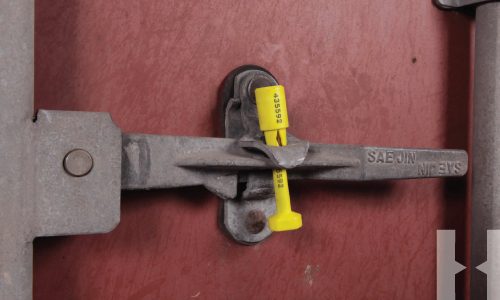
A container seal is a special seal that locks containers. It is impossible to open a container without a broken container seal. Each seal has an individual seal number.
The seal number is on the final invoice, packing list, and bill of lading. The seal ensures that nobody opened the container before you.

- Inner Plastic - February 20, 2026
- Master box - February 20, 2026
- Inner box - February 20, 2026