Table of Contents
Complete information on export documents for coconut charcoal briquette buyers. *update for 2026
This article is up to date and valid for 2026.
Buying coconut charcoal is not only buying the actual product but also arranging export & import documentation for customs and shipping.
The main problem is that shisha charcoal is classified as Dangerous Goods (DG 4.2 // UN 1361) and not all shipping lines (only a few shipping lines accept it) accept it for shipment.
What are the most important documents you have to pay attention to:
Zunächst einmal muss Ihnen der Verkäufer der Holzkohle die folgenden Dokumente vorlegen:
- A certificate of Origin or COO is an important international export document that certifies that your coconut charcoal is wholly obtained, produced, and manufactured in Indonesia. The issuing COO is the General Directorate of Foreign Trade in Indonesia.
Notice that coconut manufacturers cannot issue this document by themselves. COO is printed on stamped paper with a registered number. This document is requested by customs in your country. There are several types of COO used for coconut charcoal export:
- Certificate of Origin Form A: If you are bringing coconut charcoal to Canada, Japan, Russia, Europe, the USA, and Turkey, the original copy of this COO is light green.
- Certificate of Origin Form D: is for ASEAN countries such as Brunei, Malaysia, Singapore, Vietnam, the Philippines, and Thailand. The original copy of this COO is red.
COO wird in Indonesien post-factum ausgestellt, d.h. nachdem das Schiff den Hafen verlassen hat. In der Regel dauert es 1-2 Tage, bis dieses Dokument ausgestellt ist. Die Kosten für die Ausstellung betragen 15 USD.
2. Bill of lading or B/L – is a document issued by a carrier to acknowledge receipt of cargo for shipment from Indonesia. Basically, it is proof that coconut charcoal was shipped. You must show a B/L to customs in your country to receive the goods. Without a B/L, you cannot receive charcoal in the country of arrival.
In der Regel sendet Ihnen der Kokosnusskohlehersteller nach Eingang der Restzahlung das Original-B/L per DHL zu. Eine andere Möglichkeit ist eine „Telex-Freigabe“ – in diesem Fall erhalten Sie eine E-Mail/elektronische Bestätigung und keine tatsächlichen Papiere.
B/L can be issued by the carrier (Maersk, OOCL, MSC, Evergreen, or others) or by a local transportation broker. It is important for you to get a B/L issued by the carrier, as you can check the status of your container online on the carrier’s website.
B/L from a transportation broker is usually issued one day after a container of charcoal is delivered to the port. Carrier B/L is issued one week later. This is the most important document for exporting and importing coconut charcoal.
Die empfangende Partei im B/L sollte Ihr Unternehmen oder der Zollagent in Ihrem Land sein.
3. MSDS – Ein Sicherheitsdatenblatt ist ein Standarddokument, das von einem Gutachter oder einem Kokosnusskohle-Lieferanten herausgegeben wird. Es enthält Angaben zur Handhabung von Kokosnusskohle während des Transports. Ein Beispiel für ein MSDS für Kokosnusskohle finden Sie unter diesen Link.
4. Invoice and Packing list – basically a standard commercial invoice. The packing list is a description of goods, i.e., how many boxes, weights, and pallets of charcoal are in a container. Those documents are important for your customs officers and the tax department in your country. The invoice & Packing list is issued by the charcoal factory.
Zusätzliche Dokumente.
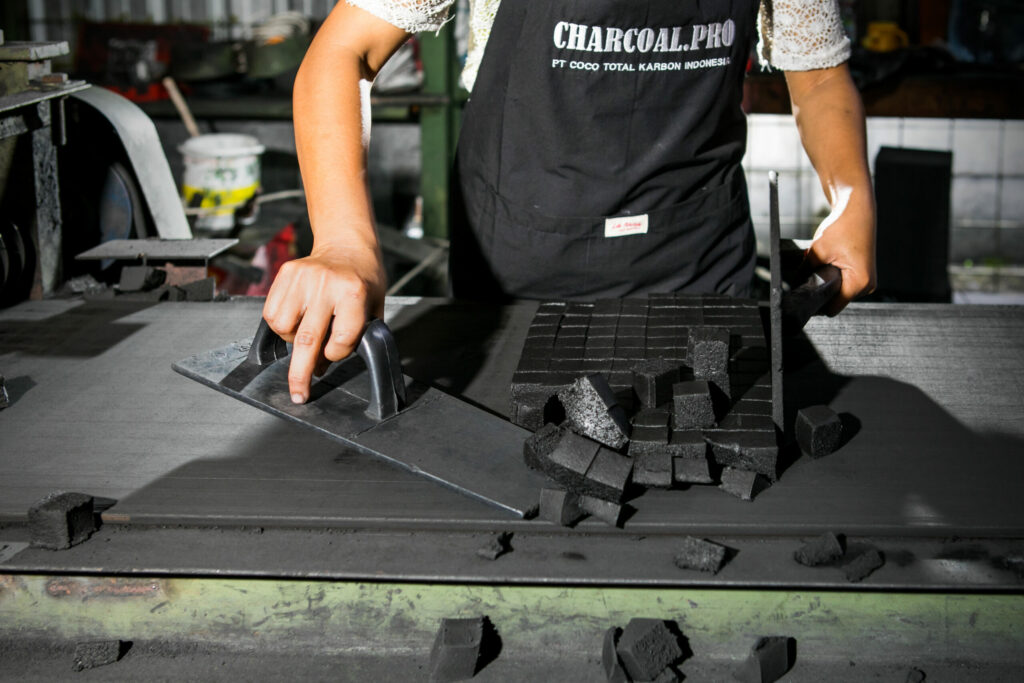
Es empfiehlt sich, die Kokosnusskohle von einem unabhängigen Sachverständigen prüfen zu lassen. In Indonesien gibt es mehrere internationale und zuverlässige Besichtiger. Um Kokosnusskohlebriketts zu überprüfen, empfehle ich Ihnen Beckjorindo, SGS oder Intertek. Diese Besichtiger sind professionell und haben eine gute SOP für die Überprüfung der Qualität und Quantität der Kokosnusskohle-Ladung.
Das Honorar des Gutachters für Kokosnusskohle beträgt etwa 400-600 USD, ohne die Laboranalyse. Die Inanspruchnahme eines professionellen Vermessungsingenieurs ist eine gute Möglichkeit, um sicherzustellen, dass Ihre Holzkohlesendung frei von Überraschungen ist.
Sales contract. Signing a sales contract is a good way to protect yourself from scams in Indonesia. Most coconut manufacturers are solid and trustworthy people, but there are also several guys who pretend to be a charcoal factory when they are not. So, having a sales contract to buy charcoal is a legal way to protect yourself.
A sample sales contract for coconut charcoal for shisha can be downloaded, or you can request it directly from our charcoal expert, Greg.
Important update for 2026
Bitte beachten Sie, dass die meisten Kokosnussholzkohlebrikett-Fabriken und -Lieferanten ihre Produkte auf zwei Arten verkaufen:
- Was die eigentlichen „Kokosnuss-Holzkohlebriketts mit HS-Code: 4402.90
- Unter der Bezeichnung: „Kokosnussprodukt“, wie z.B. getrocknete Kokosnuss oder andere
Der richtige Weg, Holzkohlebriketts zu exportieren, ist die Verwendung des HS-Codes 4402.90, der die eigentliche Bezeichnung für „Kokosnuss-Holzkohlebriketts“ ist. Wenn Sie es jedoch verwenden, werden Sie von den Reedereien als „Gefahrgut“ behandelt.
Nicht alle Reedereien akzeptieren die Beförderung gefährlicher Güter. Außerdem werden Sie (oder Ihr Kohlewerk) aufgefordert, zusätzliche Versandpapiere vorzulegen:
- SHT – Self-Heating Test Report. An additional laboratory test, made by the independent surveyor, shows that your coconut charcoal is not self-flammable. The cost of SHT in Indonesia in 2026 is 185 – 230 USD. The time to get this certificate is 2-3 days. The factory has to send charcoal briquette samples to the lab and wait for the official report.
- ROA – Report of Analysis – ähnlich den SHT-Dokumenten, die von einem unabhängigen Labor ausgestellt werden. Die Kosten für das ROA betragen 125 – 150 USD
An example of an SHT certificate can be found on our website here, or you can request the latest SHT directly from US.
Both of those documents are required for each shipment of Dangerous Goods, such as coconut charcoal briquettes.
Ihre Kokosnusskohlefabrik wird Sie höchstwahrscheinlich auffordern, diese Kosten zu übernehmen. Außerdem werden Sie „Spaß“ daran haben, das Transportunternehmen (Feeder-Schiff) zu finden, das Ihre Holzkohle von Surabaya oder Semarang zum Mutterschiff bringen wird. Die meisten Fütterer dürfen keine gefährlichen Güter mitnehmen.
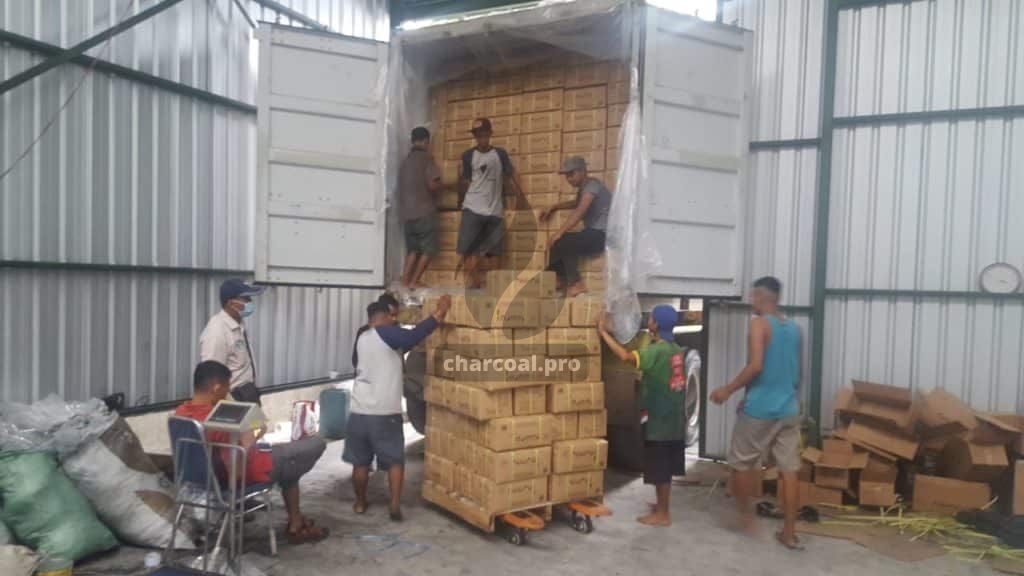
For example, OOCL has only one feeder per month that can carry Dangerous Goods (coconut charcoal briquettes) from the port of Surabaya
Andererseits können Sie Ihre Waren immer als „Kokosnussprodukt“ und nicht als Holzkohle bezeichnen. Es besteht ein Risiko, da Sie den Spediteur und den Zoll anlügen. Aber gleichzeitig müssen Sie es nicht als Gefahrgut deklarieren, und es ist viel einfacher, ein Zubringerschiff zu finden. Es fallen auch keine Gebühren für SHT oder ROA an.
Update for the documents for the Australian market
There are several additional documents for Australian customers. The Australian government requested to provide Fumigation with the level of AQIS – Australian Fumigation Accreditation Scheme.
Auf der Grundlage dieser AQIS muss Ihr Container alle 24 Stunden im Hafen begast werden. Bitte denken Sie daran, wenn Sie den Transport von der Holzkohlefabrik zum Abfahrtshafen bestellen.
Shipping with Maersk shipping lines
Maersk is one of the largest shipping lines, but its policies are highly restrictive; they allow for both „restaurant“ and „barbecue“ charcoal, provided they meet strict safety and documentation requirements. That means that in 2023-2025, Maersk does not accept shisha charcoal for shipping. But starting from October 2025, Maersk will start accepting shisha charcoal for delivery.
Die Aqis-Begasung ist für den australischen Markt nicht mehr erforderlich.
Sales contract for buying coconut charcoal briquettes from the factory in Indonesia
Aber wenn ein neuer Käufer zu mir kommt, empfehle ich, den Kokosnusskohle-Kaufvertrag zu unterschreiben.
You need a sales contract to protect your purchase of charcoal in a legal way. If something goes wrong, you can contact the Indonesian police or the arbitration to resolve the issue. Without a contract, you are risking a lot.
Was sollte in den Vertrag aufgenommen werden? Der Kaufvertrag für Kokosnusskohle unterscheidet sich von anderen Kaufverträgen.
- Zunächst einmal müssen Sie sich die Spezifikation für die Kokosnusskohle. Mit der Aussage, was ist die Höchst- oder Mindestwert für jede Position?
- Welches Volumen hat der Kauf von Kokosnussholzkohle? Kaufen Sie 20 Tonnen Holzkohle oder kaufen Sie 2000 Kisten? Wie viel Kilogramm sind in jedem Karton? Wie viele Kokosnusskohlewürfel sind in einem Kilogramm enthalten? Wie ist die Box gestaltet? Wie hoch ist das Gewicht der Masterbox?
- What are the payment terms? How much is the down payment for buying coconut charcoal? How do you pay the rest? This is an important part as many buyers misunderstand the payment procedure.
For example, the coconut charcoal manufacturer proposed a 50% down payment, and the rest was against the documents. What does it mean? The first part (down payment) is clear. You transfer 50% of the invoice to the charcoal factory.
But what about finalizing payment? When should you transfer the other 50%? If the shipping of charcoal takes 30 days, on what day should you transfer the payment? If the seller of charcoal sends you a B/L after ten days, he expects you to pay immediately. But you may think of paying for goods after arrival at your port in 29 days. This is a small issue that causes a big misunderstanding in the coconut charcoal business. You should write clearly on what day you pay money to the factory. - Clear address of the coconut charcoal factory. Are you buying from a factory or a private person? What is the real address of the factory? Who is the exporter – your factory or their customs broker? What is the legal name of the coconut charcoal supplier? In Indonesia, it is easy to check if the company really exists or if it is just a fake factory. Go to https://ahu.go.id/profil-pt and write down the factory’s legal name. If the company is a real and legal entity, it will be on the list. If you cannot find your company’s legal name – it is a fake coconut charcoal factory – be very careful.
- The time frame of coconut charcoal production and shipping. You should write down the maximum time frame (lead time) for coconut charcoal production. Sometimes factories do not have a stock of coconut shells. Or they are working overcapacity. Ask the charcoal factory how long it will take to produce if you buy charcoal in a specific date range. Do not forget to write what the penalty is if a coconut charcoal factory is late in producing charcoal.
- Vergessen Sie nicht, den Vertrag zu unterschreiben. Achten Sie darauf, wer den Vertrag unterschreibt – ist es der Direktor, der Verkaufsleiter oder einfach eine Privatperson? Versuchen Sie, ihn auf Facebook oder Instagram zu finden, um zu prüfen, ob er mit diesem Unternehmen oder dem Kokosnusskohlegeschäft in Verbindung steht.
You can find a sales contract for coconut charcoal for hookah at our website or request it directly from us. Just copy and paste it and use it for your purchase.
MSDS for Coconut Charcoal Briquettes for Shisha & Hookah
MSDS is a Material Data Safety Sheet – a document made by the charcoal factory.
Jede Fabrikhülle hat ihr eigenes Sicherheitsdatenblatt.
Das Dokument wird in der Regel von der Reederei verlangt, bevor Sie den Container buchen.
The main purpose of MSDS is to describe safety measures for handling and send shisha charcoal.
Please note that coconut charcoal for shisha is a safe product, so basically, there is no limitation on transporting or handling it.
It is not an easily flammable substance. To make it fire, you have to put charcoal on an open fire for at least 5 minutes.
The following is the link to our MSDS document (non-DG)
Starting from 1 January 2026, shisha charcoal is delivered as Dangerous (Hazard) with DG MSDS
Wenn Sie Kokosnusskohle über DHL oder Fluggesellschaften (als Muster) versenden möchten, empfehlen wir Ihnen, das folgende Sicherheitsdatenblatt für Kokosnusskohle zu verwenden.
Wenn Sie weitere Informationen über unser aktuelles Sicherheitsdatenblatt oder SHT benötigen, kontaktieren Sie uns bitte per WhatsApp oder E-Mail
SHT (Self Heating Test) for Coconut Charcoal for Shisha & Hookah
ROA – Result of Analysis Coconut Charcoal for Shisha
Das ROA ist ein wichtiges Dokument, das die Qualität der Kokosnusskohle für die Shisha belegt.
Es gibt mehrere unabhängige Labors, die ROA durchführen, insbesondere für Kokosnusskohle.
Eines der besten und genauesten ist das Beckjorindo-Labor . Sie befinden sich in mehreren Städten Indonesiens, wie Surabaya, Lampung und Semarang.
Most of our tests are performed in the Becjorindo Laboratory in Surabaya and Semarang.
Es dauert etwa 2-3 Tage, bis die Holzkohle im Labor untersucht wird.
Wir schicken unsere Holzkohleproben regelmäßig an ein Labor zur unabhängigen Analyse der Holzkohle. So können wir uns der Qualität der Holzkohle zu 100 % sicher sein.
The most important part of ROA is ash content. It shows how much ash is left after the charcoal burned out.
The best practice for ultra-quality charcoal is 1.8 to 2.0% of ash content.
Super Premium hat einen Aschegehalt von 2,0-2,2 %. Über 2,3 % ist der Premium-Typ und über 2,5 % der Medium-Typ.
Besides, we can check Moisture content, Fixed carbon, and volatile matter.
If you need more info on ROA, please contact us via WhatsApp or Email.
Dangerous Goods Declaration
A Dangerous Goods Declaration (DGD), also known as a Shipper’s Declaration (= from us as the factory) for Dangerous Goods, is a critical, legally required document used in the transport of shisha charcoal by sea.
It is a document produced by our charcoal factory that certifies the goods have been properly classified, packaged, marked, and labeled in compliance with international and national regulations.
Purpose: It acts as a safety document and a „passport“ for shisha charcoal, informing shipping lines and emergency responders about the exact nature of the goods.
Weathering Certificate
A Weathering Certificate for shipping shisha charcoal is a mandatory manufacturer declaration attesting that the cargo has undergone stabilization post-production. Without this document, securing a booking container slot on major vessels is operationally impossible due to strict international maritime regulations regarding hazardous goods. It serves as the primary verification that the Shisha charcoal is safe for ocean transport.
Why does this matter? Because without this document, getting a booking container slot is operationally impossible.
The Physics: Why Wait 14 Days?
Charcoal comes out of the drying ovens hot. I don’t just mean temperature-wise—it’s chemically unstable.
- The Process: The briquettes need to sit in a dry, well-ventilated area for a minimum of 14 days.
- The Chemistry: During this time, the charcoal interacts with oxygen, the oxidation rate stabilizes, and the temperature equilibrates with the environment.
If you skip this? You risk self-heating during transit. The certificate is the factory legally promising that this specific batch has cooled down. It shifts the liability squarely onto them.
Don’t Confuse the Paperwork
People get this mixed up constantly. There is a massive difference between the SHT and the Weathering Certificate.
- SHT (Self-Heating Test): This is just a lab test on a sample. It proves your product formulation passes UN standards.
- Weathering Certificate: This proves the shipping batch currently sitting on the dock is safe.
You need both. The MSDS has to reference the UN number for DG 4.2 and attach the SHT results, which Customs will cross-reference with your weathering cert.
The Vanning Reality Check
You can have perfect paperwork, but if the physical check fails, it’s over. During Vanning (stuffing), independent surveyors are going to stick probes right into the center of your cartons.
The Golden Rule: The temperature generally must not exceed ambient temperature by more than 5°C.
If they find a „hot spot“? Rejected. If you pack warm charcoal, you get an „oven effect“ once those container doors seal.
Navigating the Carriers: A Nightmare?
Booking DG 4.2 slots is tough because ships have limited „safety zoning“ spots for this stuff. The big lines are paranoid—rightfully so—and they all have different quirks:
- MSC: Historically very strict. They often want a Letter of Indemnity (LOI) and a specific format for the declaration.
- Maersk: Rigid. They use a restricted list of approved labs for the SHT. If your dates don’t align perfectly with production logs? Denied.
- CMA: They focus heavily on the surveyor report, cross-checking it against your weathering letter.
Buyer Beware: Red Flags
If you are buying, audit the documents yourself. Don’t trust the sales rep.
- Signatures: It must be signed by the Factory Manager or QC Head. If a sales rep signed it, it’s trash.
- Dates: Ensure the declaration date is at least 14 days post-production.
- Specificity: Generic „To Whom It May Concern“ letters get rejected. It needs the Booking Reference and Container Number.
Coconut charcoal briquettes HS Code, CAS, IMO, and UN number
Die CAS-Nummer für Kokosnusskohlebriketts lautet 68647-86-9.
Es handelt sich dabei um dieselbe CAS-Nummer wie bei Kokosnussschalen-Holzkohle.
Please note that if you use CAS number 7440-44-0, it means that this is not a coconut shell charcoal briquette, but activated charcoal.
- EG-Nummer: 271-974-4
- EG-Bezeichnung: Holzkohle, Kokosnussschale
- Molekulare Formel: C
- IUPAC-Name: Kohlenstoff
- Zusammensetzung: UVCB
- Herkunft: Bio
- GEGENSTAND: Kokosnuss-Holzkohlebriketts
- HS-CODE: 44029010
- IMO-ZAHL: 4,2
- UN NUMBER: 1361
For importers and logistics professionals handling shisha charcoal, accurate classification is critical for customs clearance and maritime safety. Below is the comprehensive technical data sheet for Coconut Shell Charcoal Briquettes, based on the 2026 MSDS and standard export classifications.
This product is classified as a Class 4.2 Self-Heating Substance, requiring specific handling protocols under IMO/IMDG regulations.
| Category | Parameter | Value / Description |
|---|---|---|
| Identification | Product Name | Coconut Shell Charcoal Briquette |
| HS Code | 4402.90.10 | |
| CAS Number | 68647-86-9 | |
| EC Number | 271-974-4 | |
| Material Origin | Organic (Coconut Shell) | |
| Transport (DG) | UN Number | 1361 |
| IMO / IMDG Class | 4.2 (Spontaneous Combustion) | |
| Shipping Name | Carbon (Technical Name: Charcoal) | |
| Packing Group | III | |
| Lab Specification | Fixed Carbon | 85.39% |
| Ash Content | 1.62% | |
| Volatile Matter | 8.66% | |
| Moisture Content | 4.33% | |
| Ignition Point | >320°C |
Expert Shipping Analysis
CAS Number Distinction (Critical for Customs)
It is vital to use the correct CAS Number for coconut shell briquettes. The correct identifier is 68647-86-9
Warning: Do not use CAS 7440-44-0. This number corresponds to elemental or activated carbon. Declaring shisha charcoal under the activated carbon CAS can lead to customs hold-ups and misidentification of the cargo as a refined chemical product rather than a biomass fuel.
IMDG Class 4.2 Hazards
According to the Material Safety Data Sheet (MSDS), this product is a Self-Heating Substance. This means the charcoal creates heat when in contact with air without an external energy supply.
- Risk: Liability for spontaneous combustion.
- Shipping Requirement: Carriers will require a Vanning Survey certification. The container must be packed to minimize airflow, and the product must be sufficiently cooled/weathered prior to stuffing.
Surveyors and the independent laboratories approved by shipping lines
There are just a few laboratories, and surveyors are approved by shipping lines. One of the best, in my opinion, is Carsurin Tbk and Beckjorindo. They serve MSC, CMA CGM, and Maersk shipping lines.
For example, if you order vanning from another laboratory that is not accepted and approved by shipping lines, your container will be rejected and returned for restaffing.
So before ordering, make sure that your charcoal factory have arrange with Carsurin or Backjorindo for vanning.
Validation by the Chamber of Commerce
For some countries, for example, Kuwait, the Certificate of Origin, Invoice & packing list should be validated by the Chamber of Commerce. Our shisha charcoal factory is registered with the Indonesian Central Java Chamber of Commerce (Kamar Dagang Jawa Tengah, Kadin)
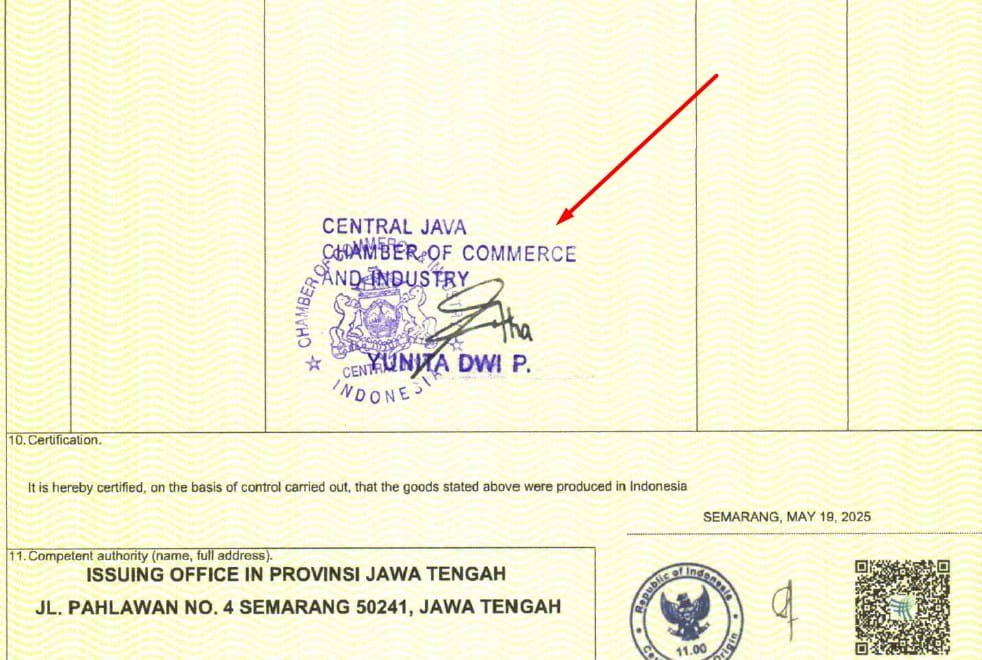
Certificate of Origin (COO) for shisha charcoal
A Certificate of Origin (COO) serves as the primary legal declaration verifying that a shipping consignment of shisha charcoal was produced entirely in Indonesia. This document is critical for customs clearance and determining the applicable import tax rates at the destination port. Without a valid COO, importers cannot access preferential tariff benefits provided by international trade agreements.
Bill of Lading – the most important document for shipping
The Bill of Lading (B/L) serves as the fundamental contract of carriage and the document of title for coconut shell charcoal briquettes. It acts as the receipt confirming that the shipping line has accepted the cargo in good order.
For wholesale bulk buyers, the B/L is the non-negotiable prerequisite for claiming possession of the container at the destination port; without it, the shisha charcoal remains locked in the terminal, accruing storage costs.
Basically, one who have it -> own the goods.
Manufacturing and packing declarations for shisha charcoal
It is a simple document that confirms that your charcoal is made by this factory and packaged according to the UN DG goods standard.